Tag: Curriculum

  • Does Homeschooling “Work”

    I don’t know. Yes.  Maybe.  Wait!  What?  Define Work?

    I have heard this before,  “I see what you are saying, but does homeschooling really work?”  My head replays the response from above.  Total confusion.

    What we need to define is what do you mean by “work”?

    Will your child turn out perfect and your relationship intact?  Maybe — maybe not.

    Will your child far outshine all the public school counterparts?  Maybe — maybe not.

    Will your child avoid all the sinful habits in the world and come through their teenage years unscathed?  I would guess not, but I guess there is a maybe there.

    My point here is nothing “works” in the sense of outcome.  Insert public school — Does public school really work?  How about private school — does private school work?  All of the models work sometimes.  Great kids come out of all of these models.  Dismal failures come out of all of these models.

    It all goes back to your goal.  Most would agree that what we are trying to do is educate our children. Let’s define “educate”. I used an old dictionary and a modern dictionary:

    Webster’s 1828:

    To bring up, as a child; to instruct; to inform and enlighten the understanding; to instill into the mind principles of arts, science, morals, religion and behavior. To educate children well is one of the most important duties of parents and guardians.

    Merriam Webster’s

    1a: to provide schooling for

    b: to train by formal instruction and supervised practice especially in a skill, trade, or profession

    2a: to develop mentally, morally, or aesthetically especially by instruction

    b: to provide with information : INFORM

    3: to persuade or condition to feel, believe, or act in a desired way

    Both of these sources indicate that to educate is to in some way pass on a program of instruction. Merriam Webster’s defines this as “schooling” or a “trade”.  Webster’s 1828 talks about principles.

    From these two sources we see a system presented of training, skills and information that a child will need for their next phase of life.  Since we are homeschooling kids high school age or younger, this ought to be a decently broad list of topics to give our children a well rounded view of the world.  We would agree I am sure that children should minimally learn to read, write and do basic math.  However, I would argue that we should be including sciences, arts, etc.  — what some would define as a liberal education.

    Both definitions have an element of morality indicated — even behavior.  Instructing our children in morals, courtesy and manners is also part of their education.  Our family is decidedly Christian, so these flow from our study and understanding of the Bible. We then teach our children that all people are made in the image of God and should be treated as such.  That means we are polite – look someone in the eye when you are talking with them, learn to shake hands, address others with respect, etc. We taught them about Jesus Christ and his saving grace poured out for all mankind, they were instructed in the creation account found in Genesis.  Morality, religion, behavior were all a part of our system of instruction.

    We didn’t just sit at a table and teach phonics and math.  We went to art museums and live plays. Music in the park or a full presentation of Handel’s Messiah.  They took music lessons and we listened to music – we learned about different instruments and composers.  We looked at art and talked about artists and painting styles.  We did crafts and learned to make things.  Some of my boys even learned to put up drywall and frame out a room.

    We followed what we believed to be important skills as well as a liberal introduction to the arts.  Some kids loved some things and some kids really didn’t. That is perfectly acceptable, we weren’t waiting for their approval; we were whetting their appetites. Just as some children develop a taste for avocados and some don’t, some loved classical music and some did not.  However, they all had at least tasted it.

    So, back to the original question: “Does homeschooling work?”  Yes, most parents are endeavoring to provide a system of instruction to their children — to educate them.  In the same way, most schools, public or otherwise, are providing a system of instruction to a class of students.  However, if you are defining “work” as an outcome of every child.  No one, not even a tradtional school can promise that. All people are born with a free will and there are choices made.  We have all heard of someone like George Washington Carver, who did not receive any real form of education who loved to learn and went about teaching himself all that he could. I am sure most of us know someone who seemed to have the necessary things provided and turned their back on all of it.

    You can provide a good, dare I say, even a great education to your child at home.  Yes, it works.  No one can ever promise you the outcome.  However, being together with your child everyday, teaching from a place of relationship and love, I believe gives you a greater chance at  helping a person grow into their purpose.

  • Why Did I Choose to Homeschool

    I get asked a lot about how I decided to homeschool. It was a definite walk on a sunny day. Then it was worked out over many years. I am not sure how I heard about homeschooling in the late 90’s.  It could have been from a radio program like Focus on the Family — I listened to those a lot, but I just don’t remember.  I remember researching homeschooling when my oldest was about 3 years old.

    I had a little file folder of research that was shoved into our regular bookcase.   My husband was not sold on the idea, he was worried about socialization issues and about sports.  How would our son play sports if he wanted to?  My friend put all her kids in an in-home preschool program that was supposed to be really good.  I looked into it, but just couldn’t fill out the application.  I decided that since my daughter was only 3 we could wait another year until she was 4 to think about preschool.  I used Sesame Street magazine and did little lessons about 3 times a week.

    Silly me — I didn’t realize how many better things I was already doing.  We would go to library story times every week.  I read aloud to my children on a daily basis.  We would listen to music together a lot.  We listened to Carnival of the Animals by Saint-Saens and tried to act out all the animals as we heard them.  My son loved listening to Peter and the Wolf by Prokofiev.  We did craft projects together and we walked a lot.  We walked around our little city and visited farmer’s markets and community orchestra performances.  We went to zoos and county fairs and local festivals.  I really didn’t need a preschool at all, but I didn’t know that.

    We were out on one of our walks one day and we walked right past the local Christian school.  I realized that if I put my oldest in school, she might go there. I imagined my son and I walking her to the door and turning to walk back home.  I spent the rest of our walk choking back tears.  I wanted to take them home like this every day.  I couldn’t imagine leaving her behind at a school. That moment of time is when my homeschooling journey took root.

    When my daughter turned 4 and my son was 2 1/2 my husband decided that we could try homeschooling.  We might continue if we tried this preschool year and things went fine.  We figured that if it was awful our daughter could enroll in Kindergarten and we wouldn’t feel like she missed anything — not every kid went to preschool right? I was so excited I ordered a traditional school box of materials for K4 and off we went. 

    We have never looked back.  Those shaky beginnings were the start of our epic nearly 30 year adventure in homeschooling.  I wish I had nailed my “Why” down more than I wanted them to be at home. I wish I had known back then that a school box of materials wasn’t necessary to start. Those loving moments of music, walking, fairs, and zoos were an abundant education. I wish I knew how much they were learning in their own imaginative play – “Star Board crew” was full of homemade hats and titles for everyone — I was always “cooker”. 

    What about allaying the original fears that my husband and many others had about socialization?  Same as that silly preschool idea I had.  Living life with your children is socialization.  We went to the library, grocery store, and church.  We attended live plays and took local art classes for kids. We hung out in the park and had family friends over often. Eventually, we also got involved in nursing home ministry, community 5k’s and some of my kids played on the public school sports teams. When I look back I see that my kids were able to speak to the lady in the wheelchair at the nursing home as easily as they chatted with their peers.

    I can not really believe that 30 years have passed since that moment I realized I did want to keep them at home. I am glad I didn’t know all that the next years would hold.  Six more children, adoption processes, trauma issues, and our home being the landing spot or transition location for a few family members.  We took care of my dying mom in her last years and I flew off to help care for my brother in his last weeks. Kids graduated, kids got married, various pets came and went, we took vacations, participated in sporting events, and kept involved at our local church.  In the process of time, homeschooling just kept plugging along.

    It started with a little walk on a nice day, and a mama’s desire to spend time with her children.  All those fears of socialization melted away as we saw what God was doing in the life of our family as we stayed faithful.  My homeschooling journey took root in a moment of time and has been worked out in the process of time.

  • Curriculum

    As a homeschooler the first question that I typically receive is, “What curriculum do you use?” It sounds simple enough, but I find it to be a difficult question.  I didn’t use ONE curriculum.  After years of trial and error, we had different things for different subjects.  I used different things for different kids.  I used different things for different seasons.  I used a lot of different things.

    I did a quick google search of my state to see what curriculum they use.  The state has learning standards and local school districts each select their own textbooks or methods for reaching those.  I tried searching my local school district and their textbooks are not publically listed.  Basically, not even the public schools in our country use one type of curriculum.

    It is safe to say that the curriculum market is wide open.  If you have ever been to a homeschooling convention you will know this to be true when you step into the vendor hall.  It is overwhelming and the choices are endless.  I understand why homeschool moms ask about curriculum, I did too. However, I think there are more important first questions that need to be considered.

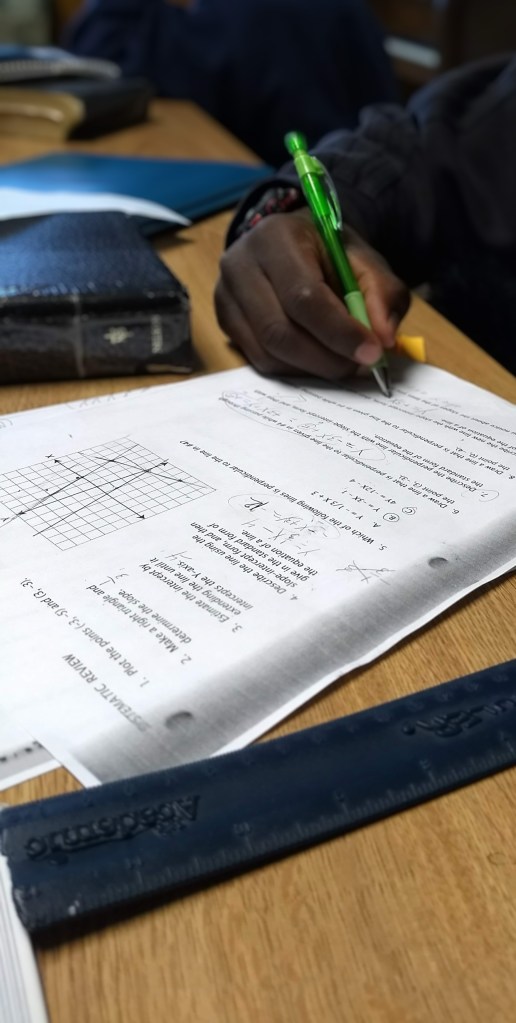
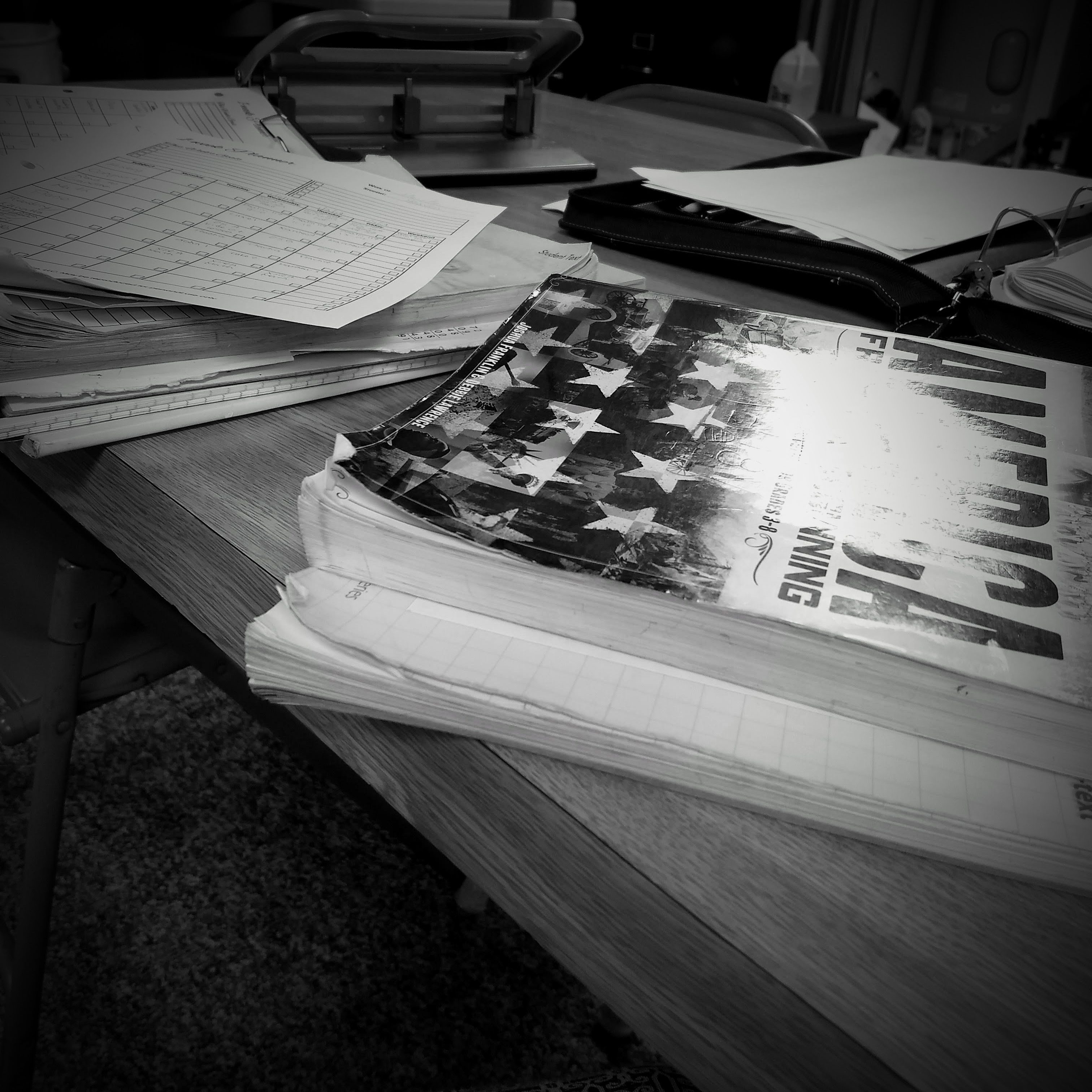
    What do you want your homeschooling days to look like?  Children watching their videos for the day and completing workbook assignments?  Desks in a room with books and workbooks to be completed?  Reading living books with narrations? A mix of all of these?   Do you want a tradtional school that looks a lot like a public school? 

    There are many different styles of homeschooling and philosophies of education.  I suggest that you do some reading and researching on the different ways and thoughts on education.  Also, do ask that older homeschooling Mom.  However, I suggest you ask questions along the lines of  how.  As in, “How do you teach math?  How do you approach language arts?”

    These questions and thoughts will begin to inform your curriculum decisions.  Your curriculum is the tool that you will use  as a means to provide the education you wish your child to receive.  Whether that includes a package of workbooks, a streaming video provider, something you develop on your own or a mix of all of the above.

    Perhaps you decide that you love the idea of a classical education with Charlotte Mason ideas and want to use living books and narrations.  You will need to look at curriculum sellers that have this as their philisopy of producing materials.  In some cases, you may not need to actually purchase a curriculum.  You may be able to follow a living books list or develop one of your own.  Use a free curriculum guide like Ambleside Online.

    You may decide to be quite eclectic with developing your curriculum.  You may use a living books approach with history and a textbook/workbook approach for science.  Maybe you find that for this season, you need a box of workbooks that can be graded and checked off.

    The point is, there is no one way to homeschool.  You need to evaluate the season of life you in and the goals you have for educating your children. Then follow those to find resources that will support your vision.